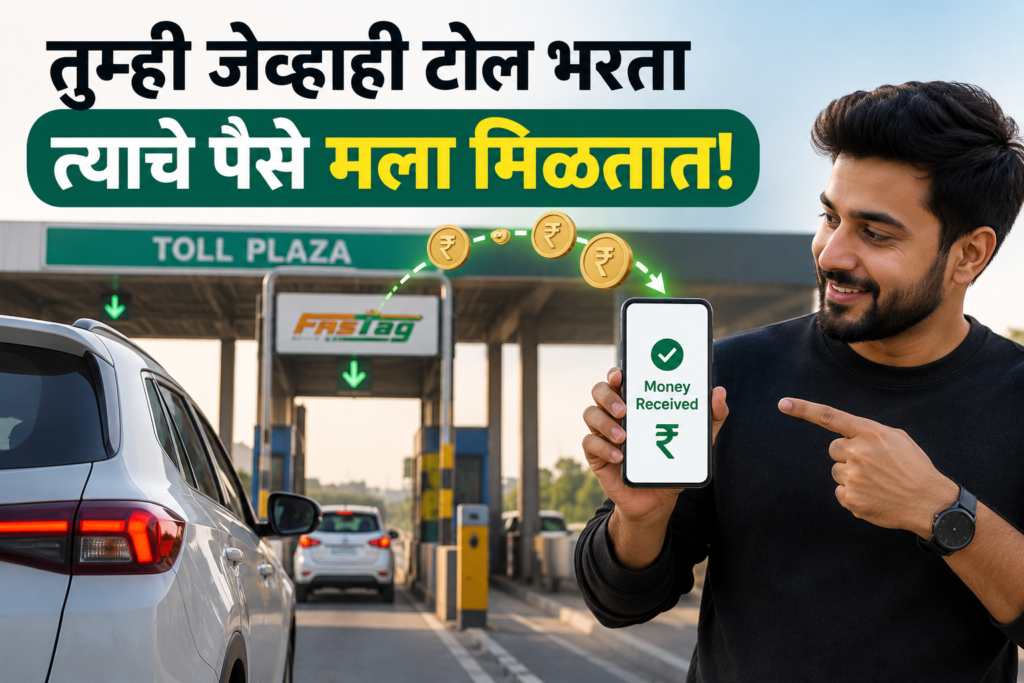
Toll Road मधून तुम्ही Investment Income कसं मिळवू शकता?
InvIT म्हणजे काय, ते कसं काम करतं, Toll Revenue चा त्याच्याशी काय संबंध आहे, Distribution कशी मिळू शकते आणि Investment करण्यापूर्वी काय तपासायचं — हे सर्व सोप्या भाषेत.
तुम्ही Toll Plaza वर गाडी घेऊन जाता आणि Toll भरता. त्या infrastructure ecosystem मध्ये तुम्ही InvIT च्या माध्यमातून indirect investor होऊ शकता.
पण एक महत्त्वाची गोष्ट — तुम्ही भरलेला Toll थेट तुमच्या bank account मध्ये येत नाही. संबंधित infrastructure assets मधून निर्माण होणाऱ्या eligible cash flowsमधून InvIT distribution करू शकते, आणि unit holder म्हणून तुम्हाला त्याचा हिस्सा मिळू शकतो.
InvIT म्हणजे काय?
InvIT म्हणजे Infrastructure Investment Trust. Infrastructure assets मध्ये investment exposure मिळवून त्यातून निर्माण होणाऱ्या cash flowsमध्ये सहभागी होण्यासाठी तयार केलेली regulated investment structure.
Infrastructure
Toll Roads, Transmission Infrastructure, Renewable Energy आणि इतर eligible infrastructure assets.
Investment
Investor InvIT चे units खरेदी करून underlying infrastructure portfolioमध्ये exposure मिळवतो.
Distribution
Eligible cash flowsमधून unit holdersना distribution मिळू शकते.
InvIT चा पैसा कसा फिरतो?
हा flow समजला की InvIT चा basic concept जवळपास पूर्णपणे clear होतो.
Toll Plaza → Revenue → InvIT Cash Flow → Distribution → Unit Holder
मग Toll भरल्यावर माझ्या account मध्ये पैसे कसे येतात?
समजा तुम्ही एखाद्या Toll Plaza वर ₹100 Toll भरला. त्या ₹100 मधील काही रक्कम थेट तुमच्या bank accountमध्ये येत नाही.
Toll Road किंवा संबंधित infrastructure asset मधून cash flow निर्माण होतो. त्या assetमध्ये exposure असलेल्या InvITच्या structureमध्ये हा cash flow येऊ शकतो.
लागू नियमांनुसार distributable cash flow ठरवल्यानंतर InvIT unit holdersना distribution करू शकते.
“Direct Toll Income” नाही — “Indirect Infrastructure Investment Income” समजा.
NDCF म्हणजे काय?
InvITच्या distribution systemमध्ये NDCF हा अत्यंत महत्त्वाचा concept आहे.
Cash Flow
साध्या भाषेत, InvITच्या structureमध्ये उपलब्ध distributable cash flowsची गणना करण्यासाठी वापरला जाणारा framework.
Applicable SEBI frameworkनुसार InvITसाठी Net Distributable Cash Flowपैकी किमान 90% unit holdersना distribute करण्याची requirement आहे, subject to applicable conditions.
हे 90% investment return नाही.
Distribution Yield म्हणजे काय?
InvITच्या income potential बद्दल बोलताना Distribution Yield हा term वारंवार दिसतो.
÷
Current Unit Price
× 100
उदाहरणार्थ, annual distribution ₹10 आणि current unit price ₹100 असेल:
Distribution बदलू शकते आणि listed InvITच्या unit priceमध्ये देखील market conditionsनुसार वाढ किंवा घट होऊ शकते. त्यामुळे displayed yieldला fixed किंवा guaranteed return समजू नका.
₹1 लाख Investment चे Example
₹10,000 हा hypothetical calculation आहे. Actual distribution यापेक्षा वेगळी असू शकते.
IRB InvIT कडे उदाहरण म्हणून कसे पाहायचे?
IRB InvIT
IRB InvIT हे road infrastructure related InvITचे एक उदाहरण आहे.
कंपनीच्या official investor announcementsमध्ये distribution per unit आणि इतर financial information जाहीर केली जाते.
उदाहरणार्थ, FY27 च्या Q1 साठी IRB InvITने ₹1.625 प्रति unit distribution जाहीर केली होती.
Distribution figures वेळोवेळी बदलू शकतात. त्यामुळे latest official announcement तपासणे आवश्यक आहे.
InvIT मध्ये Investment कशी करायची?
Listed InvITचे units stock exchangeवर brokerमार्फत खरेदी करता येऊ शकतात.
Demat + Trading Account
Valid Demat आणि Trading Account असणे आवश्यक आहे.
Broker App उघडा
तुमच्या brokerच्या app किंवा websiteवर जा.
InvIT Search करा
उदाहरण म्हणून “IRB InvIT” search करून listed unit पाहू शकता.
Documents तपासा
Asset portfolio, distribution history, debt, valuation आणि latest disclosures तपासा.
Units खरेदी करा
तुमच्या स्वतःच्या research आणि risk profileनुसार investment decision घ्या.
InvITमध्ये कोणत्या Infrastructure Assets असू शकतात?
Roads
Toll Roads आणि Highway-related infrastructure.
Power
Transmission आणि इतर power infrastructure assets.
Renewable
Renewable energy infrastructure आणि संबंधित assets.
Share आणि InvIT मध्ये फरक
| मुद्दा | Share | InvIT Unit |
|---|---|---|
| Investment | Companyमध्ये ownership | Infrastructure Trustमध्ये unit |
| Underlying Exposure | Companyचा business | Infrastructure assets / projects |
| Income | Dividend मिळू शकतो | Distribution मिळू शकते |
| Market Price | बदलते | Listed असल्यास बदलते |
| Risk | Business + Market Risks | Asset + Project + Debt + Market Risks |
InvIT मध्ये कोणते Risks असतात?
Distribution मिळू शकते म्हणून InvIT risk-free investment होत नाही.
Market Risk
Listed unitची market price वाढू किंवा कमी होऊ शकते.
Distribution Risk
Future distribution पूर्वीसारखीच असेल याची guarantee नाही.
Interest Rate Risk
Interest rates आणि borrowing costsमधील बदलांचा cash flowsवर परिणाम होऊ शकतो.
Debt Risk
Infrastructure assetsमध्ये financingसाठी debtचा वापर केला जाऊ शकतो.
Project Risk
Infrastructure projectच्या operation किंवा performanceमध्ये अडचणी येऊ शकतात.
Regulatory Risk
Government policies किंवा regulatory frameworkमध्ये बदल होऊ शकतात.
Concession Risk
काही infrastructure assets specific concession arrangements आणि periodsशी संबंधित असतात.
Liquidity Risk
काही listed unitsमध्ये trading volume कमी असू शकतो.
Investment करण्याआधी ही Checklist पाहा
एक Common Mistake टाळा
SEBI frameworkमधील 90% requirement ही eligible Net Distributable Cash Flowच्या distributionशी संबंधित आहे. ती तुमच्या invested capitalवर मिळणारा 90% return नाही.
त्याचप्रमाणे, एखाद्या InvITची distribution yield 10% दिसत असेल तर त्याचा अर्थ तुम्हाला दरवर्षी fixed 10% return मिळेल असा होत नाही.
Unit price, distribution, interest rates, debt, asset performance आणि market conditions यामुळे actual investor return बदलू शकतो.
InvIT एका वाक्यात समजून घ्या
InvIT म्हणजे infrastructure assetsमध्ये indirect investment करण्याची regulated structure, जिथे underlying assetsमधून निर्माण होणाऱ्या eligible cash flowsमधून unit holdersना distribution मिळू शकते.
हा article केवळ educational आणि informational purposeसाठी आहे. यातील examples hypothetical किंवा illustrative स्वरूपाचे आहेत. कोणत्याही specific InvITमध्ये investment करण्याची recommendation किंवा guarantee या articleमधून दिलेली नाही.
Investment करण्यापूर्वी संबंधित InvITचे latest offer documents, annual reports, financial results, exchange disclosures, distribution history, risk factors आणि applicable taxation यांचा अभ्यास करा.
Official References
• Securities and Exchange Board of India (SEBI) — Infrastructure Investment Trust regulatory framework
• NSE India — Infrastructure Investment Trusts (InvITs)
• IRB InvIT — Official investor announcements and disclosures
Regulatory rules, taxation, distribution methodology आणि individual InvITचे financial details वेळोवेळी बदलू शकतात. Latest official disclosures तपासणे आवश्यक आहे.